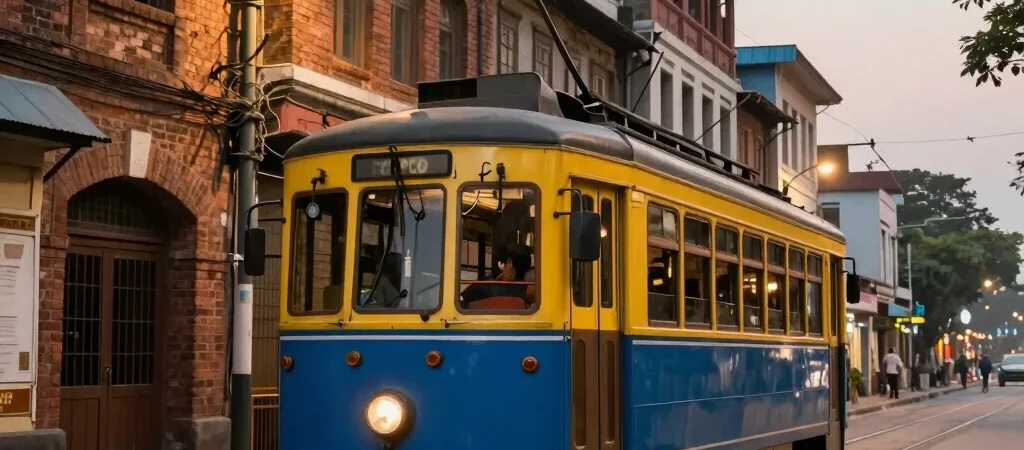
The rhythmic clinking of the Kolkata tram has echoed down the city streets since the horse-drawn cars of the late nineteenth century gave way to electric transit. More than a simple public conveyance, the tramway laid down the physical lines along which Kolkata's cultural geography expanded. From the academic hubs of College Street to the bustling markets of Shyambazar, the tram connected distinct urban subcultures.
A Slow Trajectory Through History
Riding a electric tram through the heart of the city forces a slower, deliberate pace that encourages observation. Passengers watch the urban landscape transition from British-era administrative stone edifices to bustling Bengali residential quarters framed by ancient banyan trees. Writers, political thinkers, and students have long used these wooden-seated cars as quiet spaces for conversation and reflection.
Preserving a Transit Legacy
As modern vehicular traffic threatens the remaining routes, local advocates and heritage groups emphasize the ecological and historical value of keeping the tram network alive. Archives show that the tracks themselves followed older pilgrim paths and trade routes, making the system a visible marker of how the city evolved across three centuries.
Join the Commuter Archive
Do you have personal recollections or family anecdotes tied to Kolkata's historical tram lines? Head over to our community forum to contribute your experiences and discuss the future of urban transit preservation.